9 Bounce House Safety Tips for a Safe Bounce House Rental
From Jumpin Joy Party Rentals, serving Travis and Williamson County families
A bounce house can be the best part of any party, from a backyard birthday in Pflugerville to a school carnival in Round Rock. But a bounce house rental only stays fun when it is set up and supervised the right way. The U.S. Consumer Product Safety Commission estimated more than 18,000 bounce house related injuries were treated in hospital emergency departments in a single recent year, and most of those injuries trace back to the same few causes: poor supervision, weak anchoring, or ignoring the manufacturer's weight and age limits.
This guide walks through the nine things that matter most before, during, and after your bounce house rental in Round Rock or anywhere else across Central Texas. None of it is complicated. Most of it just takes a few minutes of planning before the crew arrives.
1. Prepare and Inspect the Ground Surface
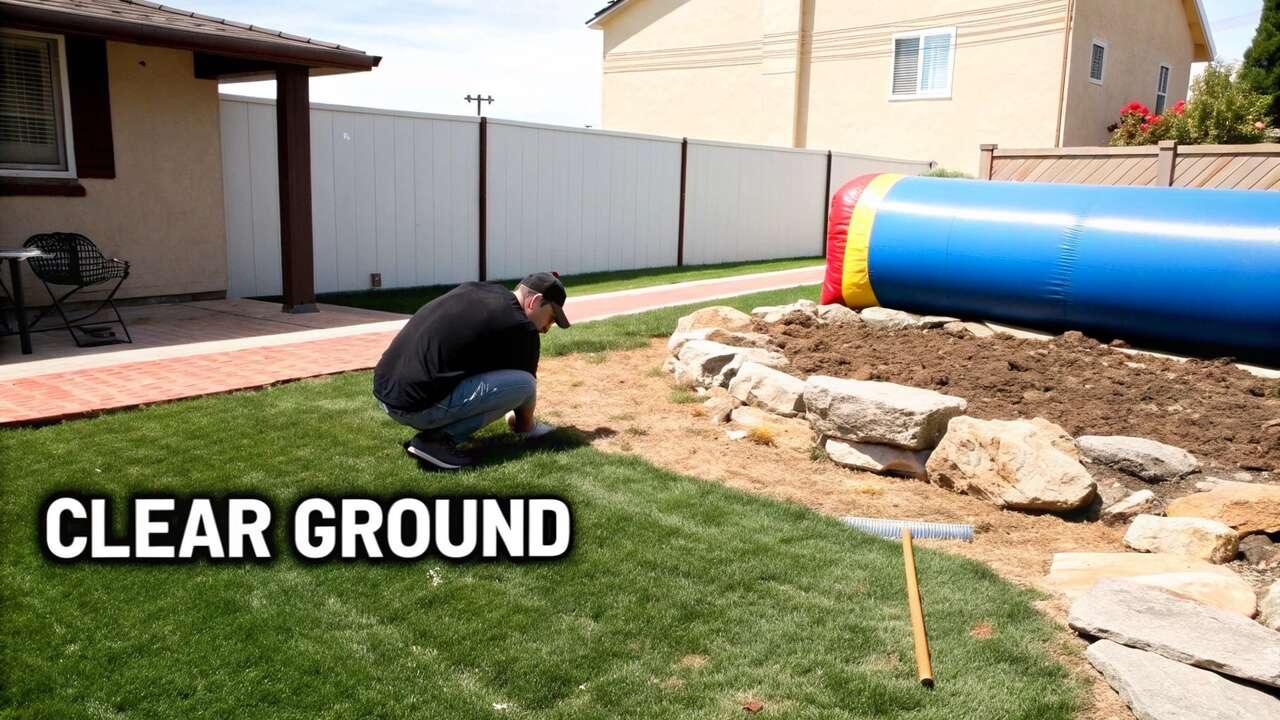
The ground under the bounce house matters as much as the bounce house itself. A level, grassy spot gives the best landing surface and the easiest anchoring. Before your crew arrives, walk the space and clear it of toys, patio furniture, garden tools, and anything else that could puncture the vinyl or trip a kid running in or out.
Key Actions for Site Preparation
- ✓Clear a 6-foot radius around the footprint, including furniture, toys, and yard tools.
- ✓Walk the area slowly looking for rocks, sticks, sprinkler heads, and other sharp debris.
- ✓Check for slope. Uneven ground can make a bounce house unstable once kids start jumping.
- ✓Snap a photo of the space before the crew arrives, so there's a record of the starting condition.
For driveways, gyms, or other hard surfaces, our crew brings heavy duty tarps as a standard part of setup. That protects the unit from abrasion and adds a little cushion on concrete.
2. Anchor It Properly for Central Texas Wind
Anchoring is the single most important safety step in any inflatable rental. An unsecured bounce house can shift, tip, or lift off the ground in a strong gust, and Central Texas gets plenty of those. Commercial-grade inflatables are built to a voluntary industry standard, ASTM F2374, that covers design, setup, and maintenance, and proper anchoring is part of that standard.
Key Actions for Secure Anchoring
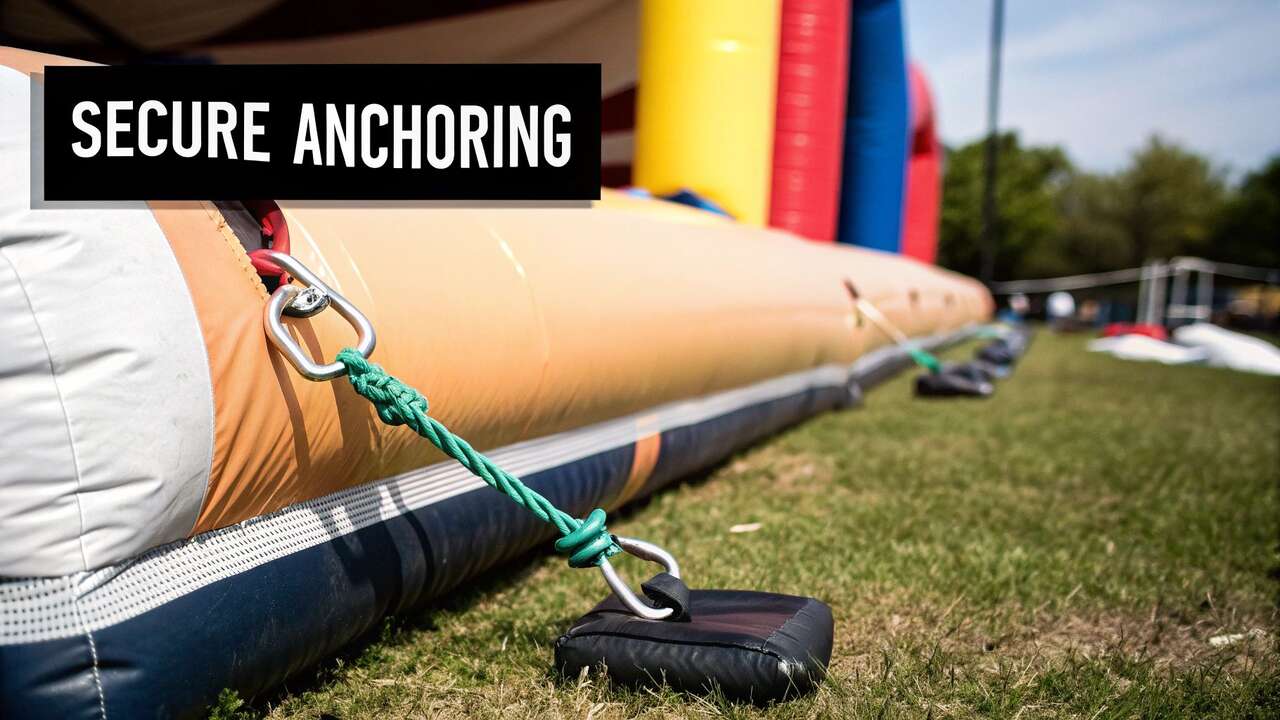
- ✓Use every anchor point the unit has. Most residential units need 4 to 6, and larger units need more.
- ✓On grass, stakes go in at a slight angle away from the inflatable for maximum hold. On concrete or asphalt, use sandbags of at least 40 to 50 pounds each, or water barrels.
- ✓Watch wind speeds throughout the event. The Consumer Product Safety Commission recommends shutting a bounce house down once sustained wind hits 15 to 20 mph.
- ✓Check tension on ropes and stakes periodically. Heavy jumping can loosen anchors over time.
Before the event starts, push on a top corner of the fully inflated unit. It should feel solid. If it shifts easily, the anchoring needs reinforcement before anyone jumps in.
3. Enforce Age and Weight Limits
Every bounce house is engineered for a specific age range and total weight. Going over those limits strains the seams and makes collisions between mismatched jumpers a lot more likely. It is one of the simplest rules to enforce and one of the most skipped.
Key Actions for Age and Weight Limits
- ✓Post the manufacturer's age and weight limits at the entrance where parents can see them.
- ✓Brief anyone supervising the unit on the exact numbers before the party starts.
- ✓For a wide age range, split jumping into blocks, like a toddler-only time before the older kids take over.
- ✓Assign one person to count kids in and out so the max never gets exceeded.
Our team can walk you through the capacity guidelines for any unit in our bounce houses lineup before you book, so you can match the size to your guest list.
4. Keep a Trained Adult Watching at All Times
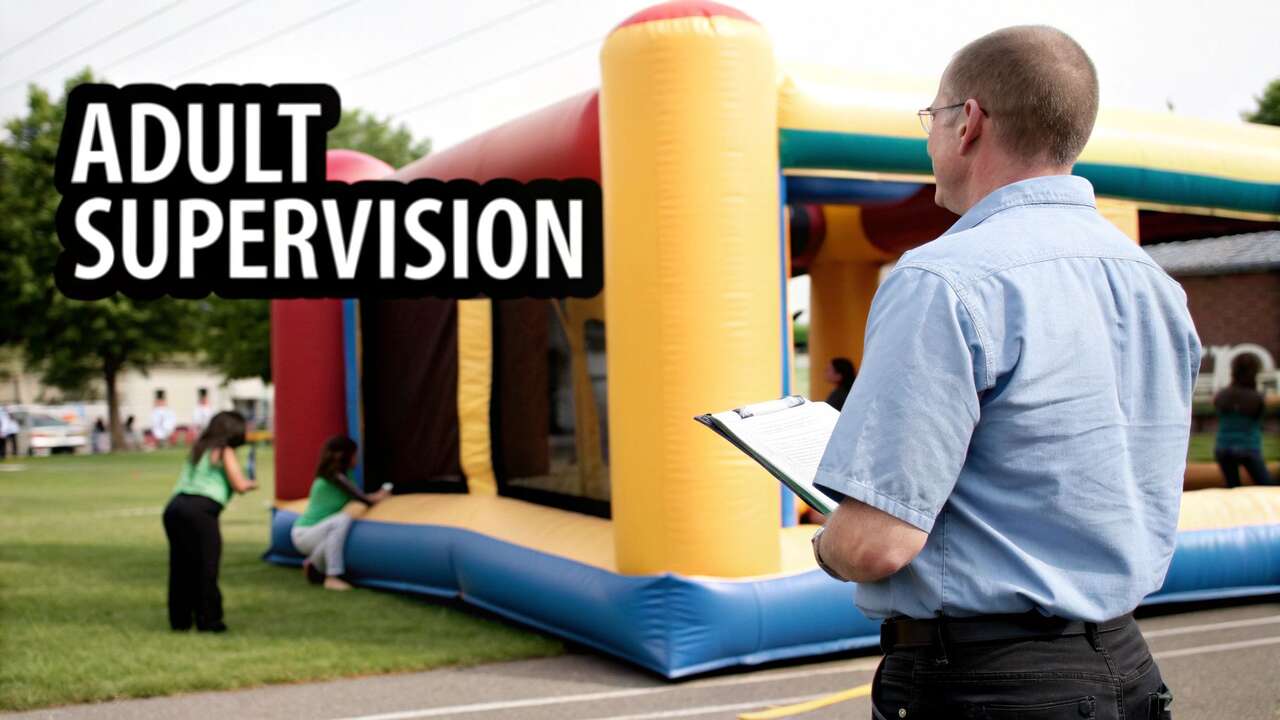
Assuming parents will keep an eye on their own kids in a busy party rarely works. What actually prevents injuries is one designated adult, positioned at the entrance with a clear view of the whole jumping area, whose only job is enforcing the rules.
Key Actions for Supervision
- ✓Enforce the basics consistently: no shoes, no flips, no climbing the walls, no sharp objects.
- ✓Track how many kids are inside at once against the manufacturer's occupancy limit.
- ✓Group jumpers by size. Never let a teenager and a toddler bounce at the same time.
- ✓For events lasting several hours, rotate supervisors every hour so attention doesn't fade.
For larger events like school carnivals or community festivals, trained staff make a real difference. Our crew can talk through staffing options when you book.
5. Set Clear Footwear and Clothing Rules
What kids wear inside a bounce house affects safety more than most parents realize. Shoes, jewelry, and loose clothing can all snag on the vinyl or on another child, turning a fun jump into a fall.
Key Actions for Safe Attire
- ✓Socks only, no shoes. Hard soles, heels, and buckles can tear the vinyl or hurt another jumper.
- ✓Empty pockets and remove jewelry, hair clips, and glasses if possible before entering.
- ✓Watch for drawstrings, capes, or baggy clothing that can catch on netting.
- ✓Mention the sock rule on the party invitation so parents come prepared.
6. Ask About Equipment Inspection and Maintenance
What separates a safe bounce house rental from a risky one often comes down to what happens before the unit ever leaves the warehouse. A real inspection checks seam strength, looks for tears or punctures, and confirms the blower is working right.
Key Actions for Vetting a Rental Company
- ✓Ask whether the company uses a standardized inspection checklist before every delivery.
- ✓Confirm their equipment is state inspected. In Texas, that means an annual inspection through the Texas Department of Insurance, and Jumpin Joy Party Rentals can be found on the state's current inspections list.
- ✓Ask how repairs are documented, not just how they're handled.
- ✓Do a quick walk-around with the setup crew before they leave and ask what was checked.
7. Communicate the Rules Before Anyone Jumps
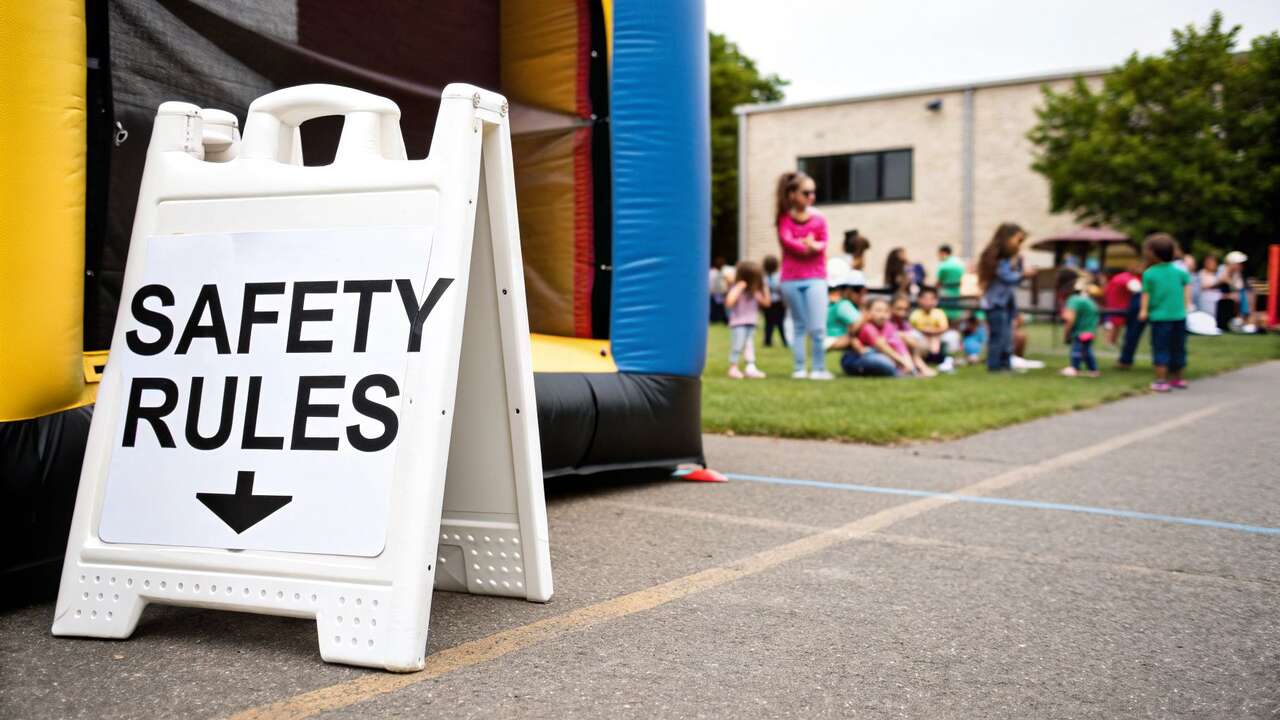
Rules only work if everyone knows them before they matter. A quick verbal briefing and a visible sign at the entrance do more to prevent injuries than any amount of after-the-fact correcting.
Key Actions for Rule Communication
- ✓Post a simple, easy-to-read sign at the entrance with icons young kids can understand.
- ✓Give a short verbal reminder before the first group goes in: no flips, no shoes, feet first.
- ✓Repeat the reminder every 30 to 45 minutes for longer events, especially as new kids join.
- ✓Include the rules in your invitation or event reminder so parents can prep kids ahead of time.
Every Jumpin Joy Party Rentals delivery includes a rule sheet covering occupancy limits and prohibited items. If you want more detail on our policies, our frequently asked questions page covers the most common ones.
8. Monitor Weather and Know When to Shut Down
Weather is the biggest wild card in any outdoor bounce house rental, and Central Texas can turn fast. Wind, rain, and lightning each carry their own risk, and knowing the shutdown point ahead of time matters more than reacting once conditions turn.
Key Actions for Weather Safety
- ✓Deflate and stop use once sustained wind or gusts reach 15 to 20 mph.
- ✓At the first sign of lightning or thunder, get everyone out immediately. The National Weather Service recommends waiting at least 30 minutes after the last lightning or thunder before resuming.
- ✓At the first sign of rain, exit the unit, then turn off and unplug the blower and move it somewhere dry.
- ✓Designate one person to check a weather app every 30 minutes and make the shutdown call.
In the hottest part of a Texas summer, a water slide rental can be a cooler alternative to a dry bounce house, though the same wind and lightning rules still apply.
9. Confirm Cleaning and Sanitization Standards
A bounce house is a high-contact surface, and a rental that isn't properly cleaned between events can spread more than just germs from the last party. A rental company's cleaning standards say a lot about how seriously they take safety overall.
Key Actions for a Hygienic Rental
- ✓Ask whether the company disinfects each unit after every use with an EPA-registered product.
- ✓Keep the socks-only rule in place. It cuts down on dirt and debris tracked inside.
- ✓Set up a hand sanitizer station near the entrance and exit.
- ✓Ask guests to keep sick kids home, and mention it in the invitation ahead of time.
Every unit we deliver goes through a full cleaning and disinfection process before it reaches your event. You can see exactly what that process looks like on our equipment cleaning page.
9-Point Bounce House Safety Comparison
A quick side-by-side look at all nine safety steps, what each one takes to do right, and why it matters.
| Safety Step | Setup Effort | What You'll Need | Safety Impact | Best For | Why It Helps |
|---|---|---|---|---|---|
| Ground Surface Prep | Moderate, 15 to 30 minutes | Rake, tarp, camera | High prevents punctures and trips | Backyards, parks, driveways | Fewer punctures, more stability |
| Anchoring and Weather Securing | High, multiple anchor points | Stakes, sandbags, straps, wind app | Very High prevents tipping | Open yards, windy sites | Keeps the unit grounded in gusts |
| Age and Weight Limits | Moderate, signage and monitoring | Signs, a headcount | High prevents overload | Mixed-age parties, school events | Protects the unit and smaller jumpers |
| Adult Supervision | Moderate to high, staffing | Trained staff, a whistle | Very High catches problems early | Large events, schools | Rapid response, rule enforcement |
| Footwear and Clothing Rules | Low, a dress code | Signage, spare socks | Moderate cuts entanglement risk | Birthday parties, indoor venues | Low cost, easy to enforce |
| Equipment Inspection | High, scheduled and documented | Trained crew, repair supplies | Very High catches defects | Every rental, especially high-use units | Extends equipment life, backs up your booking |
| Rule Communication | Low to moderate, signage and briefing | Signs, a rule sheet | High reduces risky behavior | Every event | Sets expectations before anyone jumps in |
| Weather Monitoring | Moderate, ongoing checks | A reliable weather app | High prevents weather accidents | Any outdoor event | A clear shutdown point, no guesswork |
| Cleaning and Sanitization | Moderate, between every use | EPA-registered disinfectant | Moderate to High lowers illness risk | Every rental | Builds trust, keeps guests healthy |
Frequently Asked Questions About Bounce House Safety
How windy is too windy for a bounce house rental?
Most operations pause once sustained wind or gusts reach 15 to 20 mph. Our crews check the forecast before delivery and talk through a weather plan with every customer, whether that's a delayed setup or a full reschedule.
Do I need to supervise a bounce house rental myself?
Yes. A rental company delivers and sets up the equipment, but a dedicated adult supervisor needs to stay with the unit for the entire rental period, enforcing occupancy limits and basic safety rules.
What surface does a bounce house rental need?
Level grass is ideal, since it allows for stake anchoring and a softer landing zone. Concrete, asphalt, and gym floors work too, but they need sandbags or water barrels for anchoring and a protective tarp underneath.
Is a bounce house rental safe for toddlers?
It can be, as long as toddlers aren't jumping alongside much bigger or older kids. Scheduling a separate toddler-only time block is the simplest way to keep the size mismatch from turning into a collision.
How do I know a bounce house rental company is legitimate?
Ask for proof of state inspection and liability insurance before you book. Jumpin Joy Party Rentals is on the Texas Department of Insurance's current inspections list and provides a certificate of insurance on request, at no charge, for HOAs, schools, and churches.
Ready to Book a Bounce House Rental You Can Trust?
Jumpin Joy Party Rentals delivers, sets up, and anchors every bounce house rental for families across Pflugerville, Georgetown, Austin, and the rest of Travis and Williamson County.
Book Now